Breathwork
The full picture of how breathwork works and what a session includes at our Melrose studio.
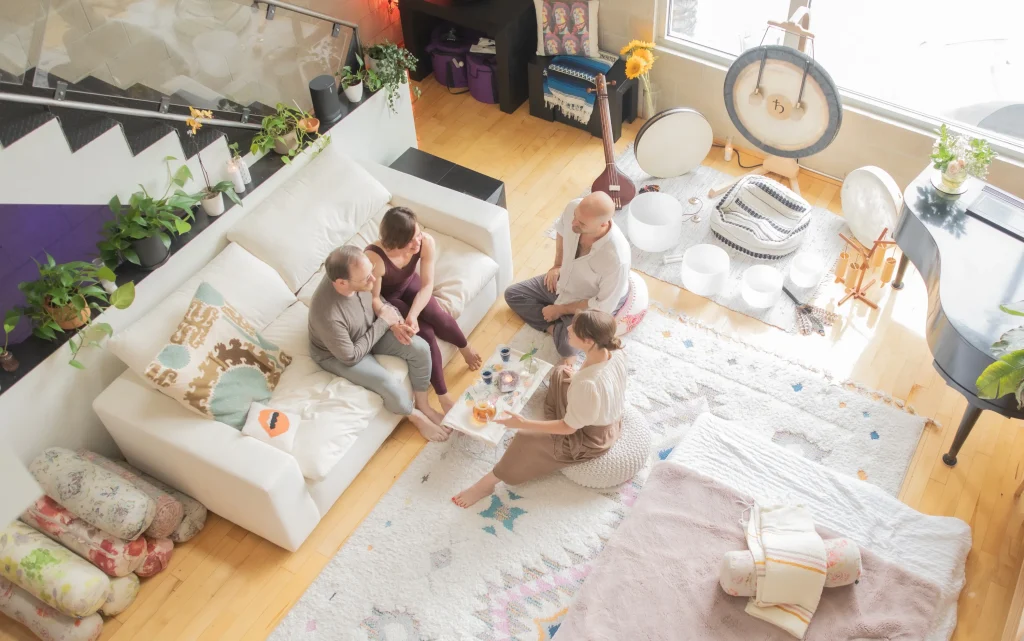
Breathwork →Professionals and creatives arrive with a nervous system locked on and racing thoughts they can name but cannot interrupt. Breathwork for anxiety at our West Hollywood studio combines conscious breathing and nervous-system regulation to ease panic and overwhelm at the body level. Sessions with Certified Breathwork Facilitators Jaime and Yonatan Elkayam run in our private Melrose loft.
Trauma-informed practice · Private Melrose studio · Certified Breathwork Facilitators
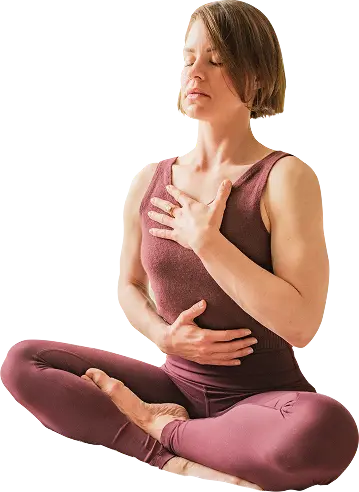
Breathwork for anxiety is a complementary practice, not a treatment for anxiety disorders. It does not diagnose or treat anxiety, panic disorder, or any other condition. It works alongside therapy and medication, never instead of either. Sessions use conscious breathing, deliberate patterns like a slowed exhale or a paced hold, to shift the nervous system out of a threat response and into something calmer.
It tends to help people whose anxiety lives in the body as much as the mind: a compressed chest, a racing mind that will not quiet with thought alone, or the wired-but-exhausted feeling that shows up after therapy has done its cognitive work but the body has not caught up. Many clients arrive already in therapy and are looking for a body-based complement, not a replacement. Many arrive skeptical. You do not need to believe breathwork works for your nervous system to respond.
Anxiety keeps the body in sympathetic dominance: elevated cortisol, shallow chest-led breathing, and muscles braced for a threat that is not actually present. Conscious breathing gives the nervous system a direct input, one that does not require you to think your way out of the state.
You do not have to believe it will work or stay cognitively focused. The nervous system responds to breath rhythm on its own, independent of belief or effort.
A slowed, extended exhale and paced breath holds signal safety to the brain and interrupt the hypervigilance and chest tightness anxiety brings.
Jaime or Yonatan reads your breath quality and nervous-system state throughout the session and can pause, slow down, or add grounding support. A recorded track cannot do that.
Breathwork works alongside therapy and medication, never instead of either. Many clients come with a referral from their own therapist.
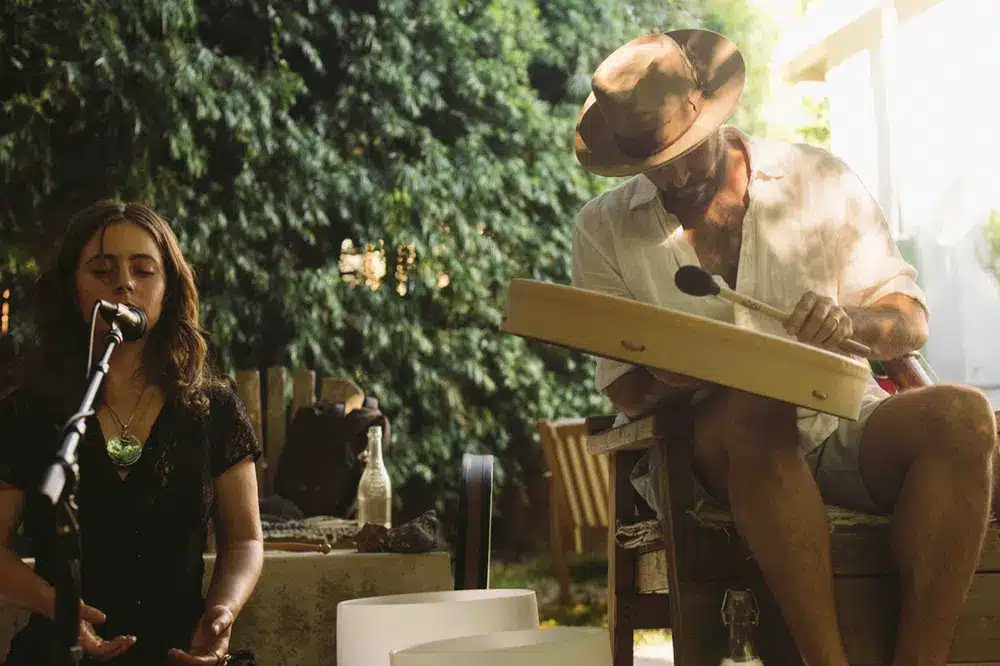
A short conversation about where you are that day, sleep, stress level, recent emotional events, calibrates the technique and pacing for the anxiety you are carrying into the room.
You lie down or sit comfortably while Jaime or Yonatan guides a conscious breathing sequence calibrated to your nervous-system state, gentler and slower for panic patterns, with grounding anchors built in throughout.
The active breathing phase slows into a check-in and time for the body to consolidate what shifted. Most clients describe leaving lighter and more grounded than when they arrived.
This is what separates a session here from a breathwork recording: a practitioner who reads the room and adjusts, in a container built for anxiety specifically.
I felt clearer, lighter, and more positive. It was like a pressure valve had been released.
By combining a mix of breath, body, mind and energy work all under one roof, in a single session, I am able to take care of myself as a whole being rather than doing maintenance on each of the parts individually.
Honest answers about safety, panic, therapy, and what a session can and cannot do.
Breathwork for anxiety sessions run in our private Melrose studio in West Hollywood, with Certified Breathwork Facilitators. New client bookings take two minutes online.
The full picture of how breathwork works and what a session includes at our Melrose studio.
Breathwork →If chronic stress and burnout carry more weight than acute panic, start here.
Breathwork for stress →Hands-on energy work that supports the same nervous-system shift, often combined with breath.
Reiki for anxiety →Singing bowls and resonant sound layered in for a deeper nervous-system settle.
Sound healing for anxiety →