
Warmth or heat
A soft warmth where the practitioner's hands rest or hover is one of the most commonly reported sensations.
Most people who book their first session have already spent hours reading about reiki online, and the same question still comes up at the door: what actually happens? The short version is calmer than you might imagine. You lie down fully clothed on a padded table, a practitioner checks in with you, then rests their hands lightly on or just above your body through a slow, unhurried sequence while you rest. Here is a step-by-step look at a reiki session from the moment you arrive.
60 to 75 minutes · Fully clothed · Private Melrose studio
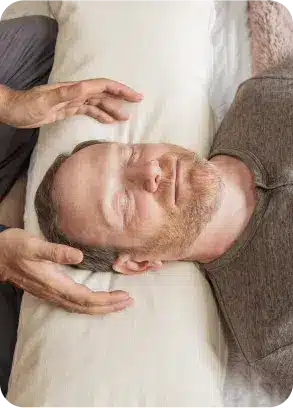
Reiki is a form of energy healing developed by Mikao Usui in Japan in the 1920s. The word joins two Japanese roots: rei, meaning universal, and ki, the vital life-force energy that flows through living things. In a session, a practitioner uses light, intentional touch to support the body's natural rest-and-repair process. You stay fully clothed the whole time, and sessions at our Melrose studio run 60 to 75 minutes. Reiki is a complementary therapy, which means it works alongside your regular medical care, not instead of it.
Here is what generally happens. You arrive, remove your shoes, and lie down on a padded table in a warm, low-lit room. Your practitioner checks in about how you are doing and what you hope to get from the session. Hands are then placed gently on or just above specific areas of the body while you rest, and the practitioner works through a slow series of positions. The session closes with a grounding transition and a few quiet minutes to reorient before you get up. Reiki does not diagnose, treat, or cure any condition.
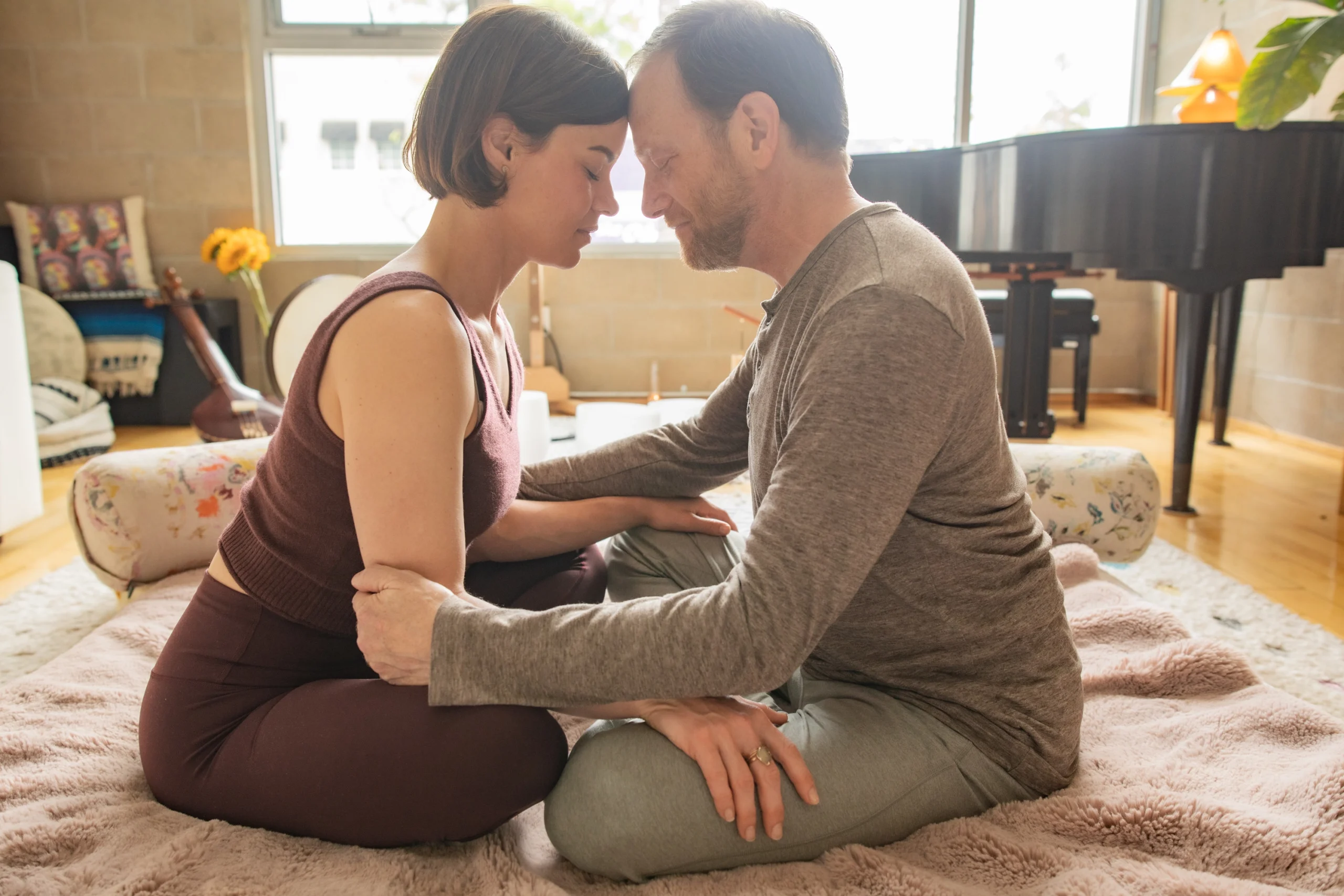
A session does not start on the table. It starts with a conversation. This is not a medical intake, but the answers matter, because they tell us how to pace the session and where to focus. Jaime and Yonatan are married Certified Reiki Master Teachers who work together every day, and the check-in is where they begin reading your nervous system before any hands-on work starts.
Any pain, tension, or discomfort you have been carrying, and where it tends to sit.
Your stress load going in, how you have been sleeping, and anything that has been calling for attention.
Some people arrive with a clear intention. Many do not, and that is completely fine.
Whether you prefer light touch or hands held just above the body. The choice is always yours.
Shoes come off at the door. You lie down fully clothed on a padded table in a warm, low-lit, quiet room. There is no music unless you want it and nothing to do except settle in. Tea if you would like it.
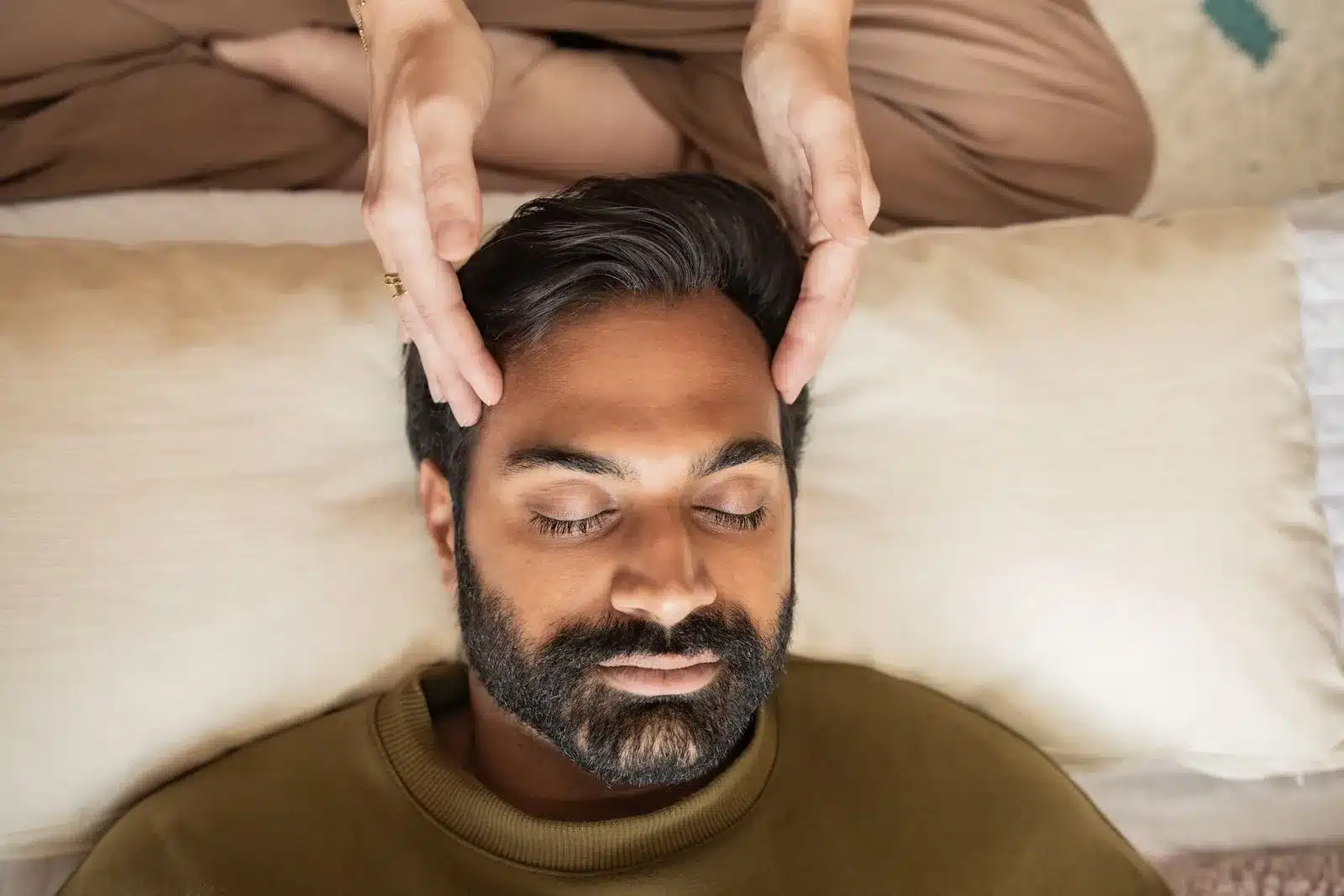
The practitioner works through a gentle sequence, moving from the head and neck to the shoulders and chest, then toward the abdomen and feet. Each position is held for several minutes. There is no rubbing and no pressure, and the work happens in near silence.
Many people describe a heaviness in the limbs and a quieting of the mind that goes beyond ordinary rest. Some fall asleep. Others go still in a way they have not managed in months. All of it is welcome.
The session ends with a grounding hold, never abruptly. You stay on the table for a few quiet minutes and reorient before you sit up. We are not sending you straight back onto the freeway.
We do not follow a rigid script. Both practitioners work from a trauma-informed approach, so the pace is guided by your system, not a fixed sequence.
Sensations vary from person to person and session to session. These are what clients describe most often, offered as a complement to medical or mental-health care.
A soft warmth where the practitioner's hands rest or hover is one of the most commonly reported sensations.
A light pulsing or tingling can move through the hands, feet, or spine as the body settles.
Many describe a pleasant heaviness in the limbs, like slowly sinking into the table.
A sudden quiet can arrive in a mind that rarely stops. Clients often leave clearer and more grounded than when they came in.
Tears, a long exhale, or the feeling that something lifted. These are normal expressions of a nervous system finally letting go.
Some people drift off entirely. If you do, nothing is wasted. Falling asleep means your nervous system has fully let go. Explore reiki energy healing.
Some people feel very little the first time, and that does not mean nothing happened. The effects of reiki vary for every individual, and there is no wrong way to respond.
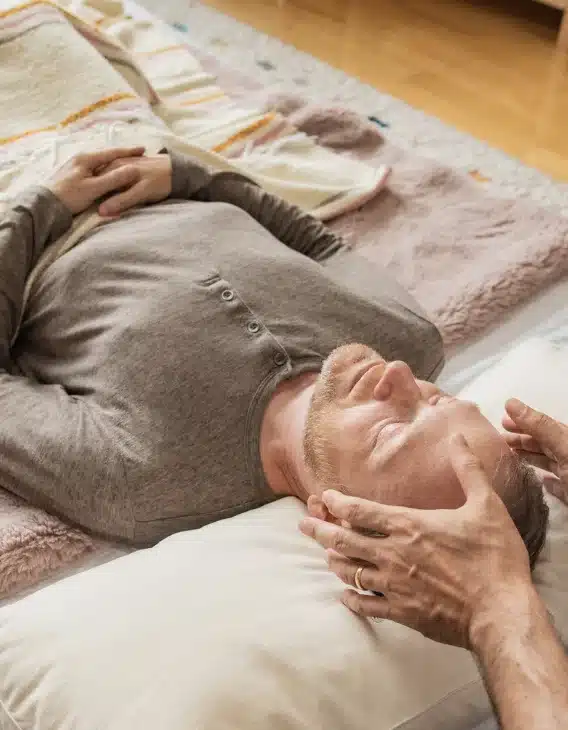
Reiki is not massage. There is no rubbing, kneading, or pressure. It is not acupressure, so there are no trigger points and no manipulation. And it is not an assessment. We are not diagnosing anything. What a session offers is something most people are not getting enough of: a full hour to actually stop.
We stay honest about the evidence. Research suggests reiki may help some people relax and ease stress and anxiety, and it may support the parasympathetic nervous system, the part of the body responsible for rest and repair. The National Center for Complementary and Integrative Health also notes that reiki has not been clearly shown effective for any specific health condition, and that studies have been mixed. We share that plainly. What is consistent is that many people feel meaningfully calmer after a session, whether they arrive as skeptics or seasoned practitioners.
You do not need a spiritual background or any belief in life-force energy for a session to be worthwhile. What reiki asks of you is simpler than most people expect: show up, lie down, and give your nervous system the space it has been waiting for.
The session does not end the moment you sit up. A gentle close matters, and a little care in the hours afterward helps the calm settle in. A small number of people feel tired or tender in the 24 to 48 hours that follow, which practitioners understand as the body settling after a release. It passes, and many describe the days after as noticeably clearer.
A simple, common recommendation after energy work and bodywork.
Where you can, leave a little room afterward rather than rushing straight into the next thing.
Many people prefer to avoid heavy exercise, alcohol, and skipped meals in the first few hours.
Give yourself permission to be reflective. A settled nervous system often makes for easier sleep that night.
Honest answers about what to wear, what you might feel, and what reiki can and cannot do.
The clearest way to understand a reiki session is to experience one. Sessions run 60 to 75 minutes in our private Melrose studio with Certified Reiki Master Teachers. New client booking takes about two minutes online.
Hands-on and hands-off reiki with Certified Reiki Master Teachers in a private Melrose loft.
Reiki healing →A closer look at your first visit, from the check-in to the quiet minutes at the end.
What to expect →Simple ways to get the most from your session, before you arrive and on the day.
How to prepare →New client booking takes about two minutes. Private Melrose studio in West Hollywood.
Book now →