Reiki Energy Healing
Hands-on and hands-off reiki with Certified Reiki Master Teachers in a private Melrose loft.
Reiki healing →Trauma-aware reiki is a complementary practice. It is not trauma therapy, psychotherapy, or a substitute for a licensed, trauma-informed clinician, and it does not treat or diagnose PTSD or any trauma condition. At our West Hollywood studio, Certified Reiki Master Teachers Jaime and Yonatan Elkayam work with the nervous system and held tension at a consent-first pace, with a hands-off option always available. Clients often describe leaving calmer, more grounded, and more present.
60 to 75 minutes · Private Melrose studio · Certified Reiki Master Teachers
Trauma-aware reiki is a complementary practice. It is not trauma therapy, psychotherapy, or a substitute for a licensed, trauma-informed clinician, and it does not treat or diagnose PTSD or any trauma condition. If you are in crisis, please call or text 988 (Suicide & Crisis Lifeline) or contact a licensed mental health provider immediately. This page is not crisis care.
What it offers instead is a body-level complement: consent comes first, the pace follows your nervous system, and nothing is rushed or forced. Word of Mouth has developed this trauma-aware approach over 10 years of working with clients across Los Angeles, including therapists, caregivers, and survivors who needed a session that would not ask them to go faster than their body was ready to go.
It tends to help clients who have already done narrative work, in therapy or otherwise, and whose body is still braced: a jaw that will not unclench, shoulders pulled toward the ears, a nervous system still scanning for the next threat long after the story has been told. Reiki works at the level of the body and the energy field, not the level of narrative, so you are never asked to retell what happened.
Every trauma-aware session at Word of Mouth follows the same protocol, regardless of what you are carrying. Here is exactly what that looks like.
Before hands are placed, your practitioner runs a brief attunement conversation about what you are carrying, what areas to work with, and what to avoid. You always know what is coming next.
You can request a fully hands-off session at any point. Your practitioner works with the energy field without skin contact. You choose, and you can change your mind mid-session.
You can slow the session, take a break, or end it at any point, no explanation needed. The session follows your nervous system, not a script.
If a session starts to feel like too much, your practitioner slows down. Staying within your capacity matters more than completing a routine.
Jaime is a Certified Reiki Master Teacher and Somatic Facilitator. Reading what the body is communicating in real time shapes how every session is paced. For structured, ongoing support at this intersection, explore trauma-informed coaching.
Private loft off Melrose Avenue, warm light, quiet. Nothing starts until you are ready, and there is no clipboard waiting for you.
A short conversation about what you are carrying and what to avoid guides hand positions and pacing for the rest of the visit.
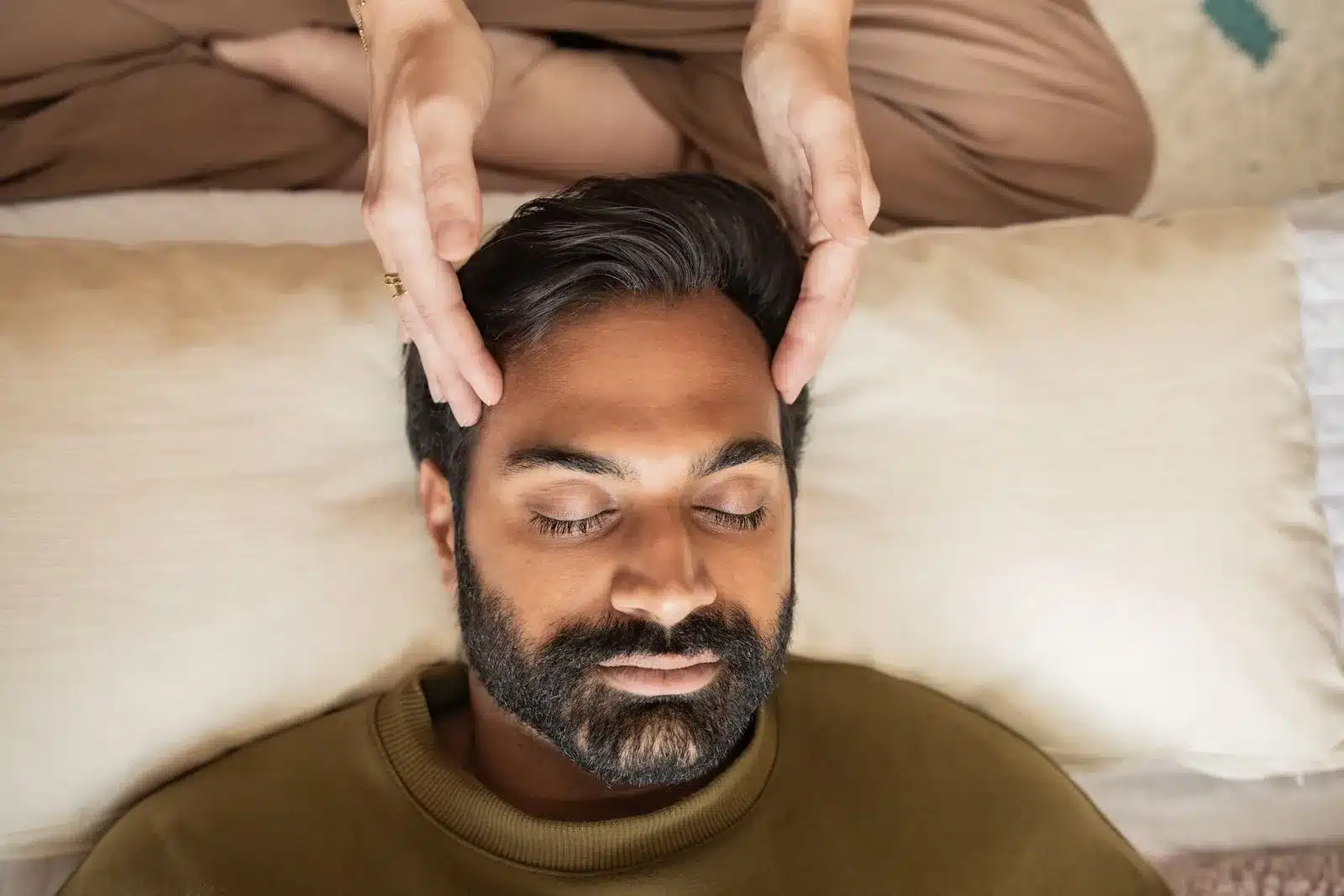
You lie fully clothed on the treatment table. Touch is always light and optional; a fully hands-off session is available at any point, and you can pause or stop without explanation.
No jarring ending. Your practitioner checks in with you before you leave, offers grounding if something significant came up, and shares what they noticed.
If you are in a licensed therapy program, tell your therapist you are adding reiki. Many welcome it as a body-level complement to EMDR, Somatic Experiencing, or IFS work between sessions.
As a licensed clinical mental health therapist as well as a Reiki practitioner for over two decades, I must say that my experience with Word of Mouth was profoundly nurturing as well as professional and poignant. I walked away both feeling wiser and calmer while also more present and uplifted.
I feel safe with Yonatan and Jaime. I have shared things and burdens I have never shared with anyone, because until them I thought trust was an illusion. I now know what trust feels like.
Honest answers about safety, pacing, and what a trauma-aware session can and cannot do.
If you are working with a therapist and looking for a body-level complement to that work, we are here. Sessions run 60 to 75 minutes, fully clothed, at our private Melrose studio in West Hollywood. If you need support right now, please call or text 988.
Hands-on and hands-off reiki with Certified Reiki Master Teachers in a private Melrose loft.
Reiki healing →Support for stuck feelings and numbness when the weight is emotional, not specifically trauma-related.
Emotional release →Support for racing thoughts, shallow breath, and the wired-but-exhausted feeling anxiety brings.
Reiki for anxiety →Conscious breathing for nervous-system regulation, often layered into a trauma-aware session.
Breathwork →