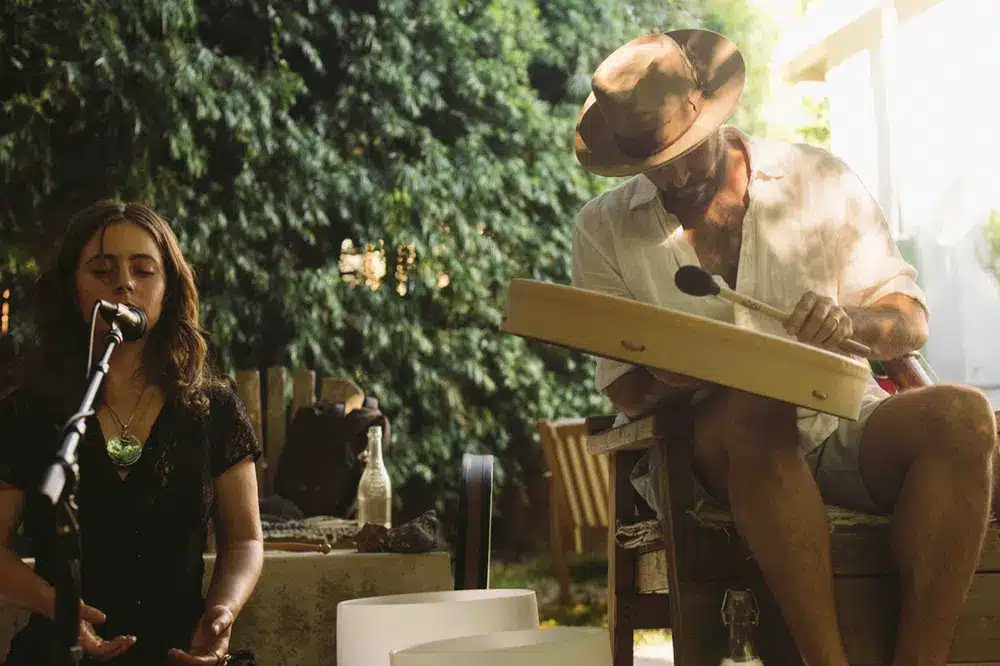
Warmth and gentle tingling
A soft heat or a light buzzing under the practitioner's hands is one of the most commonly reported sensations.
Reiki is a Japanese energy-healing practice. In a session, a practitioner rests their hands lightly on or just above your body and holds a calm, focused intention while you relax. In the traditional Usui framing, they are working with your energy field to support flow and ease tension. What almost everyone feels is simpler to describe: the body settles, the breath deepens, and the nervous system shifts out of fight-or-flight into rest. Here is an honest look at what is happening.
60 to 75 minutes · Private Melrose studio · Certified Reiki Master Teachers
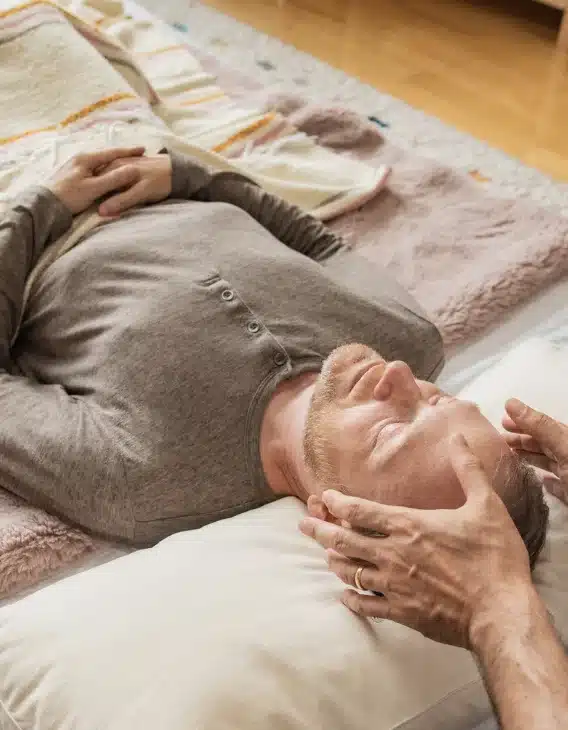
Reiki is a Japanese energy-healing practice with roots in the Usui tradition. During a session you lie down, fully clothed, while a practitioner moves their hands through a sequence of light-touch or hands-off positions and holds a steady, unhurried intention. The traditional explanation is that the practitioner is working with the body's life-force energy, supporting flow where things feel stuck or depleted. That is how the practice has described itself for a century.
What is not in dispute is what people actually feel. As the session unfolds, breathing slows and deepens, muscles let go, and the nervous system shifts out of fight-or-flight into a rest-and-restore state. From that settled place many clients report sleeping better, thinking more clearly, and carrying less tension. Reiki is complementary. It does not diagnose, treat, or cure any condition, and it is never a substitute for medical or mental-health care. What it reliably offers is a genuine path into deep relaxation, and a great deal follows from that.
Strip the session down and there are two things happening at once: the energy work the tradition describes, and a physiological shift you can feel in your own body. Here is how each piece fits together during a reiki session.
In the Usui tradition the practitioner moves through a set sequence of hand positions, resting lightly on you or a few inches above. You stay fully clothed the whole time.
Reiki treats the body as carrying a life-force energy that can feel stuck or drained. The practitioner's intention is to support that flow. This is the traditional account, and it is how reiki explains itself.
Whatever you believe about energy, the shift in the body is real. As you rest, breathing slows, muscles soften, and the parasympathetic nervous system moves you out of fight-or-flight into rest and repair.
One session settles the body. Returning teaches the nervous system that this calm state is reachable, so it tends to arrive faster and hold longer over time.
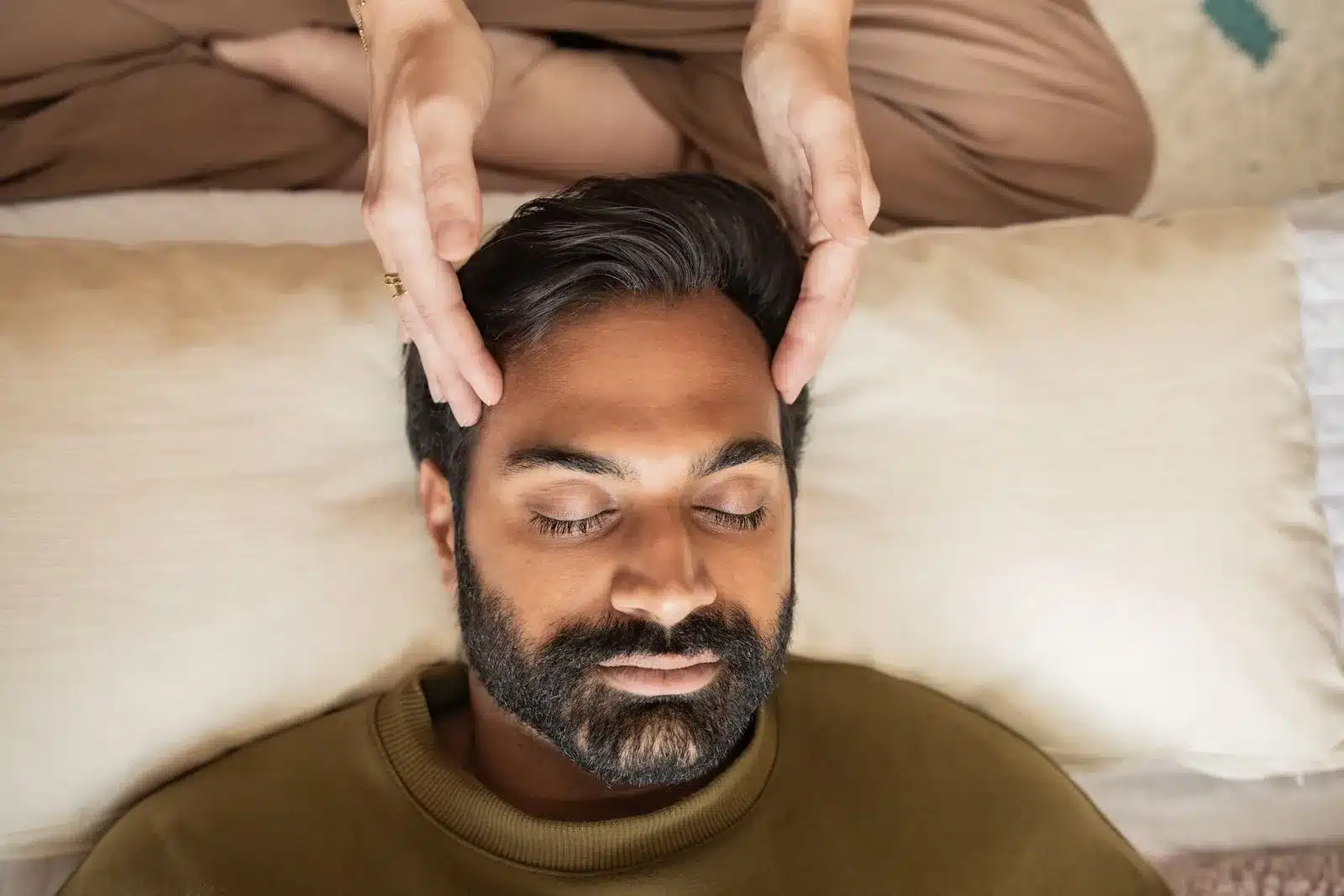
You lie down fully clothed on a padded table in a private, warm, softly lit room with curated sound already playing. There is nothing to do but rest. Tea if you want it.
A brief conversation covers what you are carrying today and whether you prefer light touch or fully hands-off work. Both are equally valid in reiki, and the choice is always yours.
Hands rest lightly on or just above the body, working head to toe through a gentle sequence. Many people feel warmth, a soft tingling, or a spreading heaviness as they drop into rest.
The session closes gently, never abruptly. Water, a few quiet minutes, and time to reorient before you step back into your day.
If you drift off, nothing is wasted. Falling asleep means your nervous system has fully let go, which is exactly what a reiki session is working toward.
Sensations vary from person to person and session to session. These are the responses clients describe most often, offered as a complement to medical or mental-health care.
A soft heat or a light buzzing under the practitioner's hands is one of the most commonly reported sensations.
Without trying, the breath tends to lengthen and drop lower into the belly as the body settles.
Many people describe a pleasant, sinking heaviness, the feeling of finally putting something down.
The mental noise quiets. Clients often leave feeling clearer, more grounded, and more present than when they arrived.
A settled nervous system makes it easier to fall and stay asleep. Explore reiki for sleep.
Tightness the body has been holding often eases. Learn how reiki for stress supports this.
Reiki is complementary and does not diagnose, treat, or cure any condition. It works alongside medical and mental-health care, never in place of it.
So is it the energy, or is it the relaxation? We will not claim more than we can honestly say. The scientific research on reiki is limited and mixed, and reiki is not a proven medical treatment. What is well established is that deep relaxation lowers stress arousal, slows the heart, and quiets the mind, and reiki reliably brings people into that state.
You can read that two ways. In the traditional view, the practitioner is moving life-force energy and the calm follows. In the physiological view, the quiet room, the light touch, the slowed breath, and a held, unhurried attention are enough to switch the nervous system into rest. Both may be true at the same time.
Here is where we land: whether it is energy work, the relaxation response, or both, the felt experience is real. Clients leave calmer, lighter, and more grounded, and that is what keeps them coming back. We would rather be honest about what we know and what we do not than oversell a mechanism. Reiki is a complement to medical and mental-health care, not a replacement for it.
Honest answers about the mechanism, the sensations, and what reiki can and cannot do.
The clearest way to understand reiki is to experience it. Sessions run 60 to 75 minutes in our private Melrose studio with Certified Reiki Master Teachers. New client booking takes two minutes online.
Hands-on and hands-off reiki with Certified Reiki Master Teachers in a private Melrose loft.
Reiki healing →A step-by-step look at a session from the moment you arrive to the moment you leave.
What to expect →What clients most often notice, described honestly, from calmer sleep to less carried tension.
Reiki benefits →New client booking takes about two minutes. Private Melrose studio in West Hollywood.
Book now →