"I just want to feel peaceful in my own body." That is what a client told us during her first consultation. She is a therapist, brilliant at her work, always the first person everyone calls when they need support. Somewhere along the way, she realized she did not know what she needed anymore. Just that there was something more.
That is the pattern we see most often in our West Hollywood studio: the very quality that makes someone exceptional at their work, the ability to sense and respond to what others need, can be trained to work for them instead of quietly wearing them down. If you are reading this thinking "I'm not usually into this kind of thing," you are in good company. That is what most people say before their first reiki session.
What reiki energy healing is
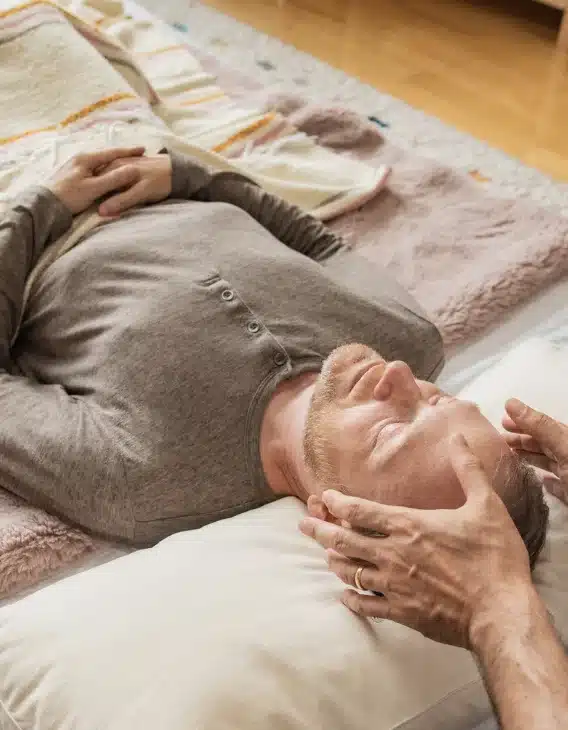
Reiki combines the Japanese words "rei" (universal) and "ki" (life force energy). A practitioner places their hands lightly on or above your body, working with your energy field to ease tension and help the nervous system settle out of fight-or-flight. Sessions typically run 60 to 90 minutes. You stay fully clothed and lie comfortably on a treatment table the whole time.
Reiki is a complementary practice. It works alongside medical and mental-health care, not instead of it, and it does not diagnose or treat any condition. What it does is create the conditions where your body's own capacity to settle and restore itself has room to operate.
What the research actually shows
If you are the kind of person who wants to see evidence before trying something new, you are not alone. Most of our clients are analytical, educated professionals who asked the same questions first. Reiki is now offered in hundreds of hospitals across the United States, not just wellness centers, and it shows up in published research on stress, pain, and quality of life. A 2024 review of cancer patients receiving reiki found reduced fatigue, pain, and stress with no reported side effects. A separate controlled trial with people managing knee osteoarthritis found lower pain scores and higher wellbeing after sessions.
The mechanism is not really about whether you believe in energy. It is about physiological response. Your nervous system does not check your opinions before it relaxes. Think of it like a massage: you do not need to believe in a theory for your muscles to soften when someone works on a tight shoulder. The same holds here.
What a session feels like
Reiki feels different for everyone, and that is part of how it works. Many people notice warmth, tingling, or a depth of relaxation they have not felt in a long time. Others do not feel anything dramatic in the moment but notice, afterward, that they are breathing deeper than they have in months.
"I felt clearer, lighter, and more positive. It was like a pressure valve had been released."
Brett F., client
Emotional release is common and completely normal. It is not "being emotional." It is stress that has been stored in the body finally having permission to move. Some people tear up. Some laugh. Some fall asleep on the table. All of it is fine, and none of it needs to look a particular way. If this part especially interests you, we wrote more about it in reiki for emotional release.
Most people sleep better that night. Some feel lighter and more present with the people around them for days afterward. The effects tend to build with more sessions, as your system relearns what regulation actually feels like.
The five principles behind the practice
Reiki's founder, Mikao Usui, added five simple principles to the practice to bring a daily, spiritual dimension alongside the hands-on work. They read less like rules and more like gentle daily intentions:
- Just for today, I will not worry
- Just for today, I will not anger
- Just for today, I will be grateful
- Just for today, I will work honestly
- Just for today, I will be kind, to others and to myself
The "just for today" framing keeps them manageable. Nobody is signing up for a lifetime promise to never worry again. It is an experiment in what one day feels like when you set that intention on purpose.
What to expect at your first session
It starts with a short conversation, not a clipboard, so we understand what you are carrying that day. From there, sessions can also include breathwork and grounding work, and for clients who want it, a coaching conversation, because different modalities reach different parts of what you are holding. You choose how the practitioner works with you: hands-on, light touch, or hands held just above your body. Before you leave, there is time to land, talk through what came up, and integrate before you head back out into your day.
Learning reiki for yourself
Reiki is not only something you receive. It is also something you can learn to do for yourself. Our two-day Reiki Level 1 training teaches self-treatment hand positions and the five principles in small cohorts, so you leave with a daily practice you can use on your own, whether or not you ever book another session. Many clients who start with individual sessions eventually take the training once they know they want the tools in their own hands. If you would rather learn the whole path first, our reiki training page walks through every level, from Level 1 through Reiki Master.
Who tends to find the most benefit
We see three groups walk through our door most often. The first is helpers: therapists, nurses, teachers, anyone whose job requires constant emotional attunement to other people. That is a real skill, and it is also the thing that quietly runs a person down over time. The second is people moving through a real transition: a breakup, grief, a career change, recovery. Talk therapy makes sense of what happened; reiki gives the body, which is often still holding the tension long after the mind has processed it, a way to catch up. The third group is the self-described skeptics, the ones who lead with their head. Ironically, that analytical habit of mind tends to make people more, not less, attuned to what shifts during a session, because they are paying close attention the whole time.
Getting started in Los Angeles
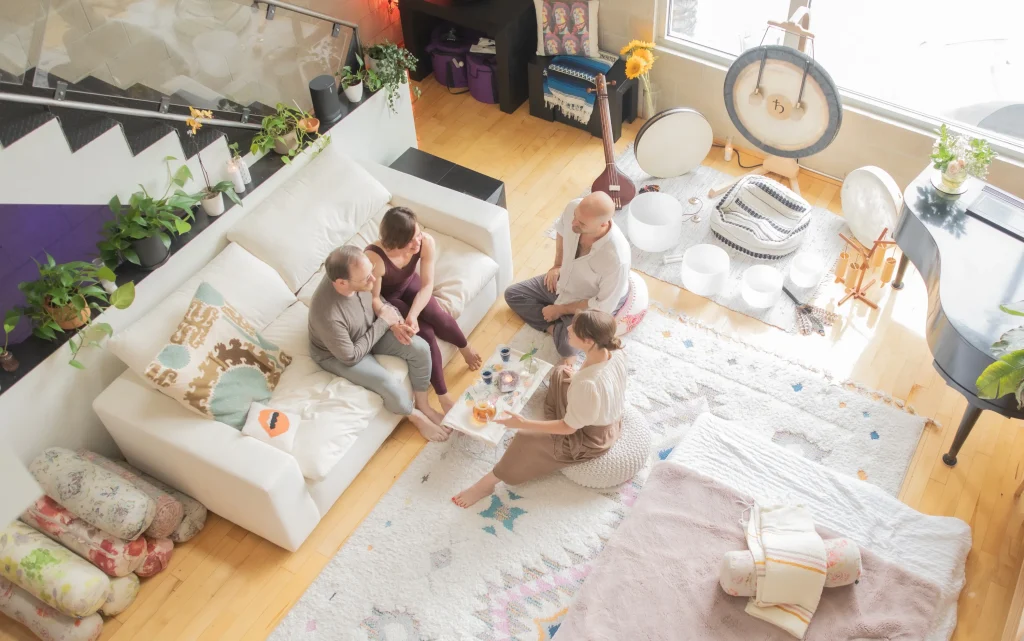
The best first step is a conversation. We will ask what has been going on for you, what you have already tried, and what you are hoping might shift, and we will answer anything you want to ask in return, including what a session costs. There is no obligation and no pressure. Our studio is a private loft near Melrose in West Hollywood, and we see clients from across the LA metro, including Beverly Hills, Hollywood, Silver Lake, Culver City, and Santa Monica.